Most gaming brands underestimate how quickly content becomes an operational bottleneck. One market expansion becomes three languages, then four payment methods, then separate compliance requirements, then dozens of landing pages that no longer share the same message. LuckyAgain365 treats multilingual content as an operating system rather than a translation task.
Why multilingual content needs a real system
A localized content engine is not just about changing English text into Vietnamese, Filipino, or Portuguese. The real challenge is maintaining search relevance, brand consistency, regional trust, and conversion clarity at the same time.
Without a system, teams usually run into the same problems:
– translated pages feel generic and low-trust
– search metadata is duplicated across markets
– payment instructions stop matching local expectations
– content volume grows faster than QA capacity
– campaign pages launch without consistent structured data or internal linking
The LuckyAgain365 model
Our content engine is built around coordinated layers:
1. Market-aware messaging
Each market has its own assumptions, payment familiarity, bonus language, and trust triggers. Copy should reflect those differences instead of forcing one universal message across all locales.
2. Search-aware content structure
Search pages need more than translated headlines. They require keyword segmentation, page roles, metadata, internal link logic, and entity clarity that match the market and language path.
3. Operational QA
Regional landing pages should pass through content QA, policy QA, CTA QA, and structured data QA. This avoids situations where pages look complete but fail at page discovery, trust, or conversion.
4. Reusable systems
Templates, FAQ blocks, CTA modules, and structured data patterns should be reusable — but localized enough that each market still feels native.
What a multilingual content engine should include
A strong system should support:
– market-level keyword mapping
– role-based page templates
– localized metadata and FAQ blocks
– internal link structures by market and topic
– campaign content production with QA checkpoints
– coordination between content, payments, and compliance
Landing page operations that scale
The best multilingual landing pages are built on repeatable logic. That means every page should know:
– which market it serves
– which user intent it targets
– which CTA it supports
– which payment or onboarding step it references
– which entity and topic cluster it belongs to
This creates consistency across scale without making every page look identical.
search and structured data discipline
A content engine should also protect search quality. Pages should not be mass-produced with weak variation. Instead, every market cluster needs:
– distinct title and description logic
– localized H1 and supporting headings
– FAQ that reflects real market concerns
– schema that matches visible content
– internal links that reinforce topic clusters
Content and compliance have to move together
In gaming, compliance is not a separate document that appears after the page is live. Messaging, promotional framing, disclaimer logic, and local payment references all shape whether content feels trustworthy and whether it remains operationally usable.
That is why LuckyAgain365 links content operations with compliance checkpoints instead of treating them as separate teams working in sequence.
FAQ
Why is translation not enough?
Because translation does not automatically solve search intent, regional trust, CTA relevance, or compliance tone.
What markets benefit most from this model?
Any market where language, payments, and trust expectations differ significantly — especially VN, PH, and BR.
How does this help search?
It improves page relevance, metadata quality, internal structure, and content differentiation across locales.
Next step
If you are shapeing multilingual launch pages, promo pages, or evergreen regional content, the fastest win is to define your content engine before volume grows. We can map page types, market roles, and QA checkpoints into one scalable framework.
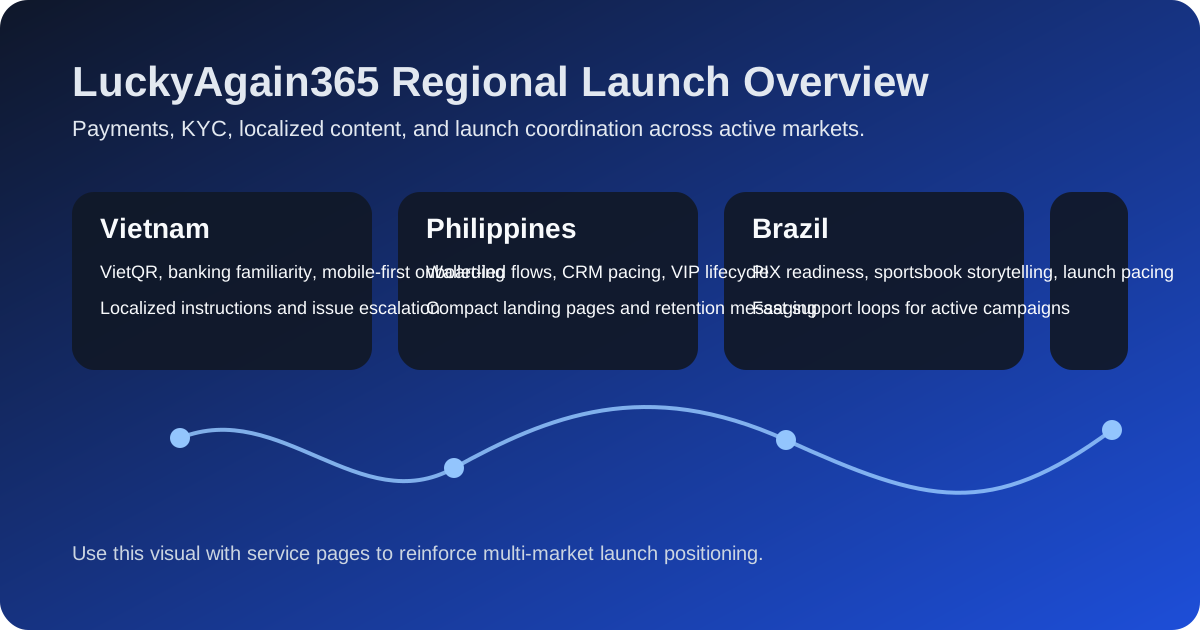
Explore the related pages for more detail: payments and KYC, multilingual content, lottery campaigns, and contact.
Why this page matters before launch
Multilingual Content Engine for Gaming Brands Across VN, PH, and BR is not meant to be a short placeholder. It should help internal teams and commercial stakeholders understand what needs to be aligned before traffic, payments and support workflows begin to scale. This page supports regional launch planning across Vietnam, the Philippines, Brazil and other multilingual gaming markets. The purpose of this page is to make that preparation clear, practical and easy to review in a single reading session.
In a multilingual platform environment, launch readiness depends on much more than design polish. Teams need coordinated messaging, payment expectations, KYC handoff logic and a realistic support path for early users. When those pieces are explained clearly, visitors and partners move through the site with more confidence and fewer avoidable questions during first contact.
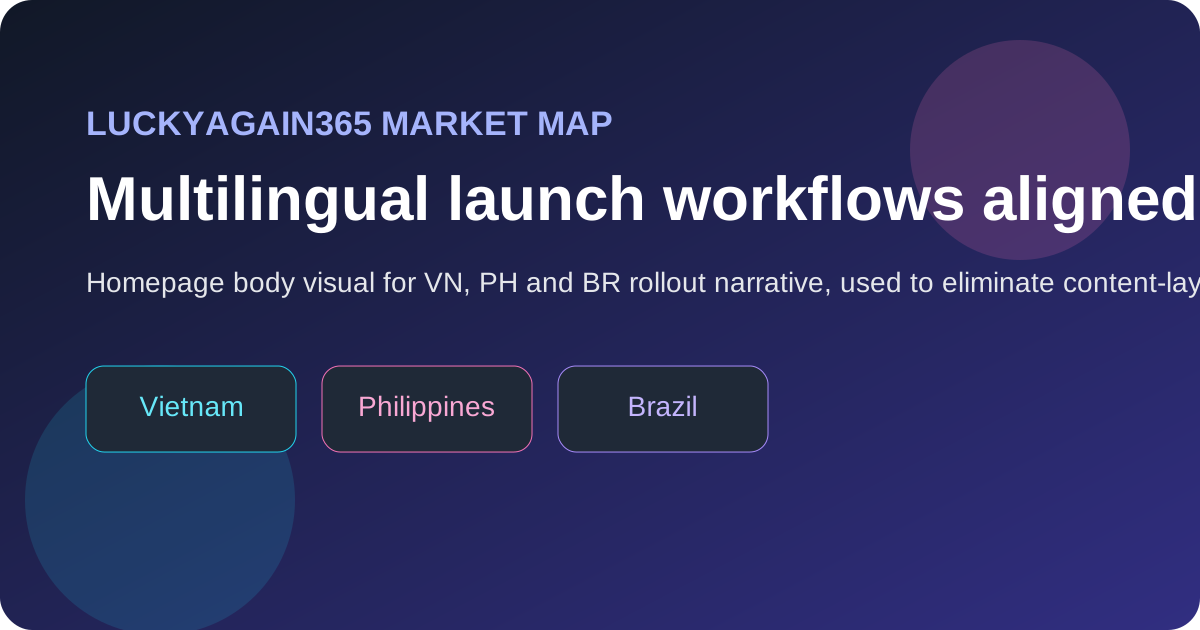
Operational checkpoints teams should review
Before treating a market page or insight brief as ready, teams should verify that the core promise is understandable in under one minute, that payment and verification language matches real operations, and that the path from article view to contact or next-step page feels natural. This keeps commercial traffic from landing on pages that look finished but still hide friction in onboarding, support expectations or content sequencing.
Another important checkpoint is consistency between regions. Vietnam, the Philippines and Brazil do not need identical positioning, but they do need a controlled structure: a clear market entry narrative, a reliable trust signal, and a direct handoff path to the next action. When these elements stay aligned, regional pages can feel local without fragmenting the broader LuckyAgain365 platform story.
How to use this brief effectively
The best way to use this page is to read it alongside the primary contact path and one adjacent solution page. That gives stakeholders enough context to see both the positioning layer and the execution layer. If a page is strong in narrative but weak in handoff, it creates hesitation. If it is strong in detail but weak in clarity, it creates friction. This brief aims to balance both.
Use the internal links below to continue the review path in a structured way: start with the main homepage, move into the contact route when the message is understood, and compare against the lottery module when a secondary product path is relevant. That sequence keeps the site usable for both first-time readers and teams reviewing launch readiness across multiple markets.
Return to the LuckyAgain365 homepage · Open the contact path · Review the lottery module