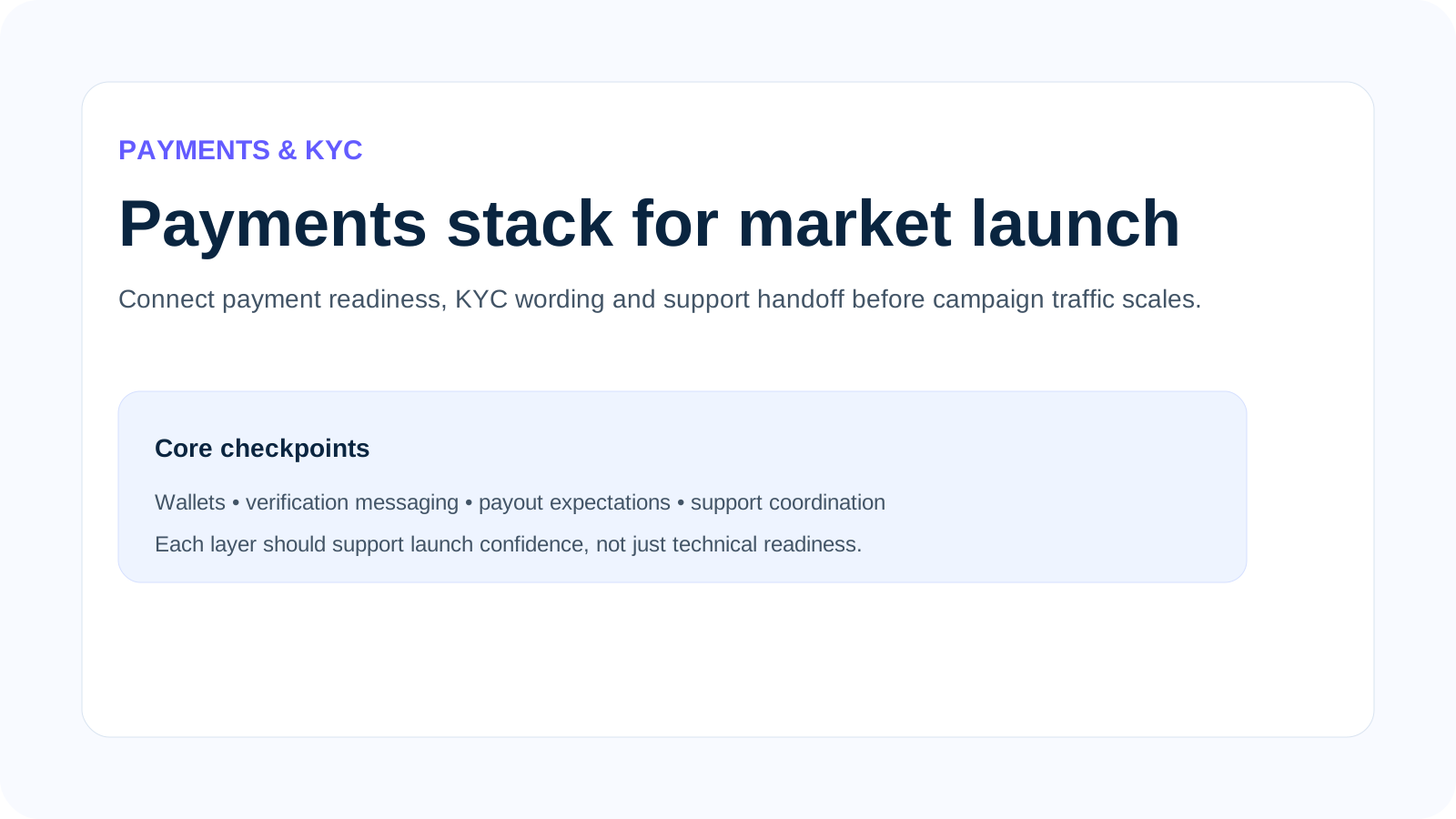
Payments are where growth plans become real user behavior. A campaign can look strong on paper, but if users cannot deposit smoothly, if withdrawal trust is weak, or if KYC interruptions appear at the wrong moment, acquisition efficiency collapses. LuckyAgain365 approaches payments and KYC as a launch system, not a disconnected technical box.
Why payment operations define launch quality
In regional gaming markets, payment experience is a trust signal. Users judge reliability through speed, clarity, local familiarity, and how quickly they can resolve failed transfers or document requests. That is why payment planning must be tied directly to campaign content, onboarding pages, CRM, and risk handling.
A complete payments and KYC stack should answer five questions:
1. Which rails match the target market?
2. Where do KYC checks appear in the journey?
3. What triggers enhanced review or AML flags?
4. How are failure cases communicated?
5. How do payment instructions stay aligned with content and support launch tracks?
Payment rails by region
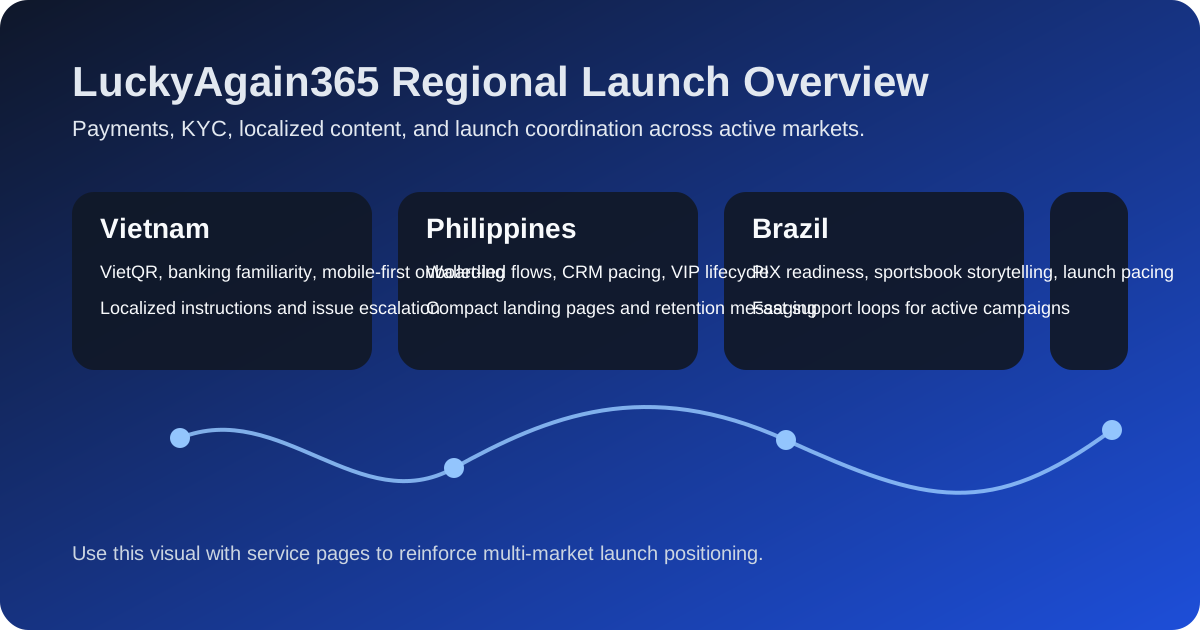
Vietnam: VietQR and bank-led familiarity
Vietnam-facing flows should be structured around user confidence in direct bank-linked movement, QR-based patterns, and clear instruction pages. VietQR support works best when brands also invest in operational copy, anti-scam guidance, and fast issue escalation.
Philippines: GCash and wallet-native expectations
In the Philippines, wallet familiarity shapes user expectations from the first deposit flow. Payment pages need concise instructions, mobile-first layouts, and strong fallback communication for failed or delayed steps.
Brazil: PIX as a speed and trust layer
PIX-centered launch tracks are now a baseline expectation for many growth scenarios in Brazil. A payments stack should support real-time communication, monitoring rules, and compliance-aware escalation when anomalies surface.
Cross-market flexibility: cards and crypto
Cards and crypto rails can support broader acquisition and operational flexibility, but they should not be introduced without clear positioning, fraud review logic, and transparent support copy.
KYC that protects the funnel instead of breaking it
KYC should not feel random. When document requests appear without logic or explanation, users abandon the flow. LuckyAgain365 recommends a structured KYC model:
– define clear thresholds for review
– align messaging with market expectations
– explain why verification is needed
– connect review states to support operations
– separate routine verification from high-risk escalation
This turns KYC from a vague block into a visible trust framework.
AML thresholds and risk launch track design
AML and fraud systems are strongest when they are operationally understandable. Instead of only relying on abstract thresholds, teams need a launch track that covers:
– trigger source
– review priority
– supporting evidence required
– communication owner
– user-facing explanation
– escalation or release path
This allows risk operations to move quickly without creating unnecessary support pressure.
Content and payments should never be separated
A deposit page, FAQ page, payments guide, and support script should describe the same process. One of the most common growth failures is operational mismatch: marketing pages promise frictionless deposit flows while actual support channels give different instructions. LuckyAgain365 closes that gap by aligning payment rails, page copy, KYC logic, and support escalation into one structured system.
Core components of a strong payments and KYC page
A high-performing payments and KYC solution page should include:
– supported rails by market
– clear KYC checkpoints
– fraud and AML launch track explanation
– FAQs about delays, verification, and trust
– conversion CTA for strategy discussion or deck request
– visual process diagram for operators
FAQ
What markets can this payment framework support?
The framework is designed for region-specific payment mixes including VietQR, GCash, PIX, card rails, and crypto, depending on launch requirements.
Is KYC only a compliance issue?
No. KYC also affects conversion, trust, abandonment, and support load. Poorly placed KYC steps can hurt growth just as much as weak payments.
Why connect payments to content launch tracks?
Because users evaluate payment trust through the instructions, FAQs, and support copy they see before they transact.
Next step
If you are planning deposits, withdrawals, or verification logic for a new market, start with a structured review. We can map rails, thresholds, support states, and operator-facing launch tracks before launch risk grows.
Explore the related pages for more detail: payments and KYC, multilingual content, lottery campaigns, and contact.
Why this page matters before launch
Gaming Payments & KYC Stack for Fast, Compliant Market Launches is not meant to be a short placeholder. It should help internal teams and commercial stakeholders understand what needs to be aligned before traffic, payments and support workflows begin to scale. This page supports regional launch planning across Vietnam, the Philippines, Brazil and other multilingual gaming markets. The purpose of this page is to make that preparation clear, practical and easy to review in a single reading session.
In a multilingual platform environment, launch readiness depends on much more than design polish. Teams need coordinated messaging, payment expectations, KYC handoff logic and a realistic support path for early users. When those pieces are explained clearly, visitors and partners move through the site with more confidence and fewer avoidable questions during first contact.
Operational checkpoints teams should review
Before treating a market page or insight brief as ready, teams should verify that the core promise is understandable in under one minute, that payment and verification language matches real operations, and that the path from article view to contact or next-step page feels natural. This keeps commercial traffic from landing on pages that look finished but still hide friction in onboarding, support expectations or content sequencing.
Another important checkpoint is consistency between regions. Vietnam, the Philippines and Brazil do not need identical positioning, but they do need a controlled structure: a clear market entry narrative, a reliable trust signal, and a direct handoff path to the next action. When these elements stay aligned, regional pages can feel local without fragmenting the broader LuckyAgain365 platform story.
How to use this brief effectively
The best way to use this page is to read it alongside the primary contact path and one adjacent solution page. That gives stakeholders enough context to see both the positioning layer and the execution layer. If a page is strong in narrative but weak in handoff, it creates hesitation. If it is strong in detail but weak in clarity, it creates friction. This brief aims to balance both.
Use the internal links below to continue the review path in a structured way: start with the main homepage, move into the contact route when the message is understood, and compare against the lottery module when a secondary product path is relevant. That sequence keeps the site usable for both first-time readers and teams reviewing launch readiness across multiple markets.
Return to the LuckyAgain365 homepage · Open the contact path · Review the lottery module